Featured Recycled Swimwear Lines for African Coastal Markets
Factory-direct technical swimwear engineered with quick-dry, high-salinity resilience and UPF 50+ ultraviolet protection. Each collection supports custom pattern adaptations, luxury hardware modifications, and African curve grading.
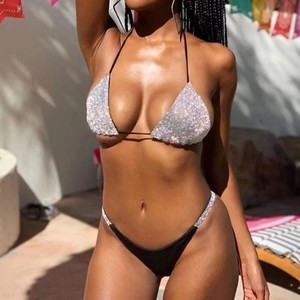
2026 European American Style Bikini Two-Piece Rhinestone Lace-Up Halter Triangle Bra V-String
- Fabric: Recycled Nylon / Spandex
- Weight: 210 GSM Double-Knit
- MOQ: 50 pcs / style / color
- Best For: Accra Beach Clubs & Day Parties
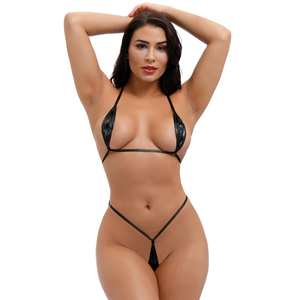
Solid Color Three-Point String Shiny Micro Bikini Low Waist Thong Swimsuit
- Fabric: Regenerated Polyamide Lustre
- Features: Anti-Chlorine, Quick-Dry
- MOQ: 50 pcs / style / color
- Best For: Tanning, Private Villa Pools
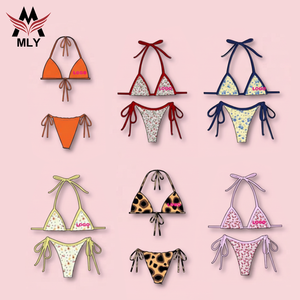
Luxury Two-Piece Micro Triangle Swimwear High Waist Bikini Set Halter Lace-Up
- Fabric: GRS Recycled Matte Nylon 80/20
- Support: Underbust Architecture Band
- MOQ: 50 pcs / style / color
- Best For: Boutique Curated Collections

Woman Thong Swimsuit Micro Bikini Sexy Hot Sale Series Low-Rise Silhouette
- Fabric: ECONYL® Regenerated Nylon 190G
- Lining: Ultra-soft Recycled Mesh
- MOQ: 50 pcs / style / color
- Best For: DTC Dropshipping & Fast Drops
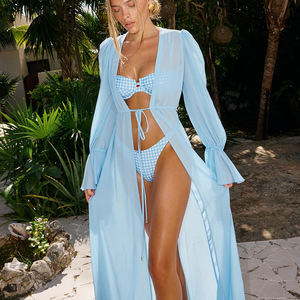
Check Pattern Padded Bikini Top Brief Matching Sheer Bell Sleeve Maxi Beach Kimono 3-Piece
- Fabric: Eco Polyamide + Chiffon Outer
- Printing: Waterless Eco-Sublimation
- MOQ: 50 pcs / style / color
- Best For: Ada Foah & River Resort Lounging
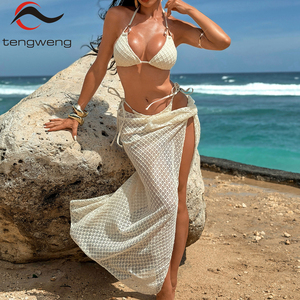
Triangle Bra Halter Mesh Three-Piece Solid Swimsuit Set Customizable Low-Waist
- Fabric: Breathable Recycled Nylon Mesh
- Features: Sweat-Wicking, Quick Drainage
- MOQ: 50 pcs / style / color
- Best For: Busua Beach Surfing & Active Swim
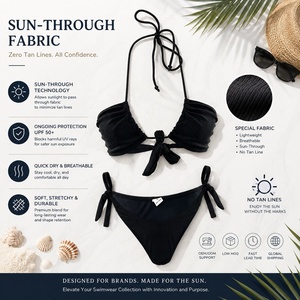
Beach Sexy Bikini Black Tan-Through Micro-Porous Breathable Fabric Swimwear Set
- Fabric: Patented Tan-Through Nylon Matrix
- Air Flow: 3.8x Higher Breathability
- MOQ: 50 pcs / style / color
- Best For: Even Bronzing Without Tan Lines
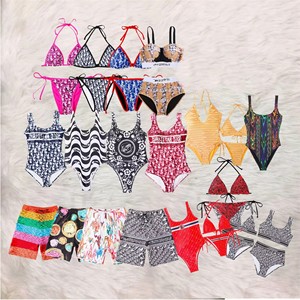
Customization Ladies Grid Printed Swimwear Fashion Designer Bikini Swimsuit
- Fabric: REPREVE® Eco Blend 82/18
- Resistance: Suntan Oils, Salinity, UV
- MOQ: 50 pcs / style / color
- Best For: Ghanaian Luxury Beachwear Labels
Why Recycled Polyamide (Nylon 6) Dominates the Gulf of Guinea Climate
Standard polyester textiles degrade prematurely under tropical West African environmental pressures. Here is the technical breakdown of why leading swim brands in Accra, Takoradi, and Cape Coast specify regenerated nylon fibers.
Operating a beachwear brand in Ghana requires understanding the physiological and mechanical demands of the equatorial coastal belt. Coastal Ghana experiences year-round ambient temperatures averaging 26°C to 32°C, coupled with relative humidity rates consistently hovering between 75% and 90%. Furthermore, coastal waters from the Gulf of Guinea maintain an average ocean salinity level of 35.5 practical salinity units (PSU), compounded by intense solar irradiance reaching UV index levels of 11 to 12+ on open shores like Kokrobite and Busua.
Under these extreme parameters, standard virgin synthetic blends undergo rapid mechanical degradation. Standard virgin polyester is hydrophobic, which traps high perspiration against the wearer's skin during beach social activities, causing chafing and microbial odor proliferation. Conversely, Recycled Nylon 6 (Polyamide) engineered from post-industrial waste and reclaimed ocean gillnets (ECONYL® / GRS regenerated nylon) provides a significantly higher moisture-regain coefficient (approximately 4.5% versus polyester's 0.4%). This intrinsic molecular capability facilitates capillary evaporative cooling, preventing dampness-induced fabric breakdown in equatorial humid zones.
Beyond thermal regulation, tensile elasticity and shape retention are critical for the West African silhouette. Our high-gauge warp-knit recycled nylon incorporates up to 22% Roica™ Eco-Smart or Invista Lycra® elastane. This creates multi-directional 4-way mechanical stretch that resists thermal sagging when wet, ensuring secure underbust hold and waist-contouring stability across high-intensity surf swells and extended poolside wear.
| Technical Characteristic | Standard Virgin Polyester (PET) | Beyond Swimwear GRS Recycled Nylon 6 | Operational Impact in Ghana Market |
|---|---|---|---|
| Hydrophilic Moisture Regain | 0.4% (Traps body sweat, creates heat rash) | 4.5% (High evaporative breathability) | Maximum thermal comfort in 85%+ Accra humidity |
| Gulf of Guinea Salinity Resistance | Moderate; prone to salt crystal encrustation | Superior; smooth filament prevents micro-tears | Extended lifecycle for water sports in Busua and Ada Foah |
| UV 50+ Photodegradation | Requires chemical topical coatings (washes out) | Inherent UV-shielding molecular extrusion | Prevents color bleaching and fiber brittleness under UV 12+ |
| African Curve Tensile Recovery | 65% recovery after 200 elongation cycles | 94% recovery with high-modulus warp-knit | Retains snug structural contours without bagging at the hips |
| Carbon Footprint Metric | High petrochemical feedstock intensity | Up to 80% reduction in greenhouse emissions | Appeals to affluent, eco-conscious Ghanaian diaspora buyers |
Target Application Scenarios Across Ghana’s Coast & Leisure Hubs
Designing for the Ghanaian market requires segmenting collections across high-energy social scenes, active surf eco-tourism, and luxury river retreats. Here is how our OEM production lines map to local consumer behaviors.
Accra Luxury Beach Clubs & "December in GH" Circuit
Venues like Sandbox Beach Club, Polo Beach Club, and luxury private beach cabanas in Labadi command glamorous, opulent swimwear. Consumers seek embellished bikinis featuring custom metallic accents, rhinestone straps, and vibrant custom color palettes. These garments transition seamlessly from sunbathing to evening open-air VIP nightlife, requiring high rub-fastness against velvet daybeds, suntan oils, and champagne spills.
Busua Beach & Western Region Surf Eco-Tourism
Busua, Dixcove, and Cape Three Points host West Africa's most prominent surf communities. Female and male surfers demand athletic swimwear, rash guards, and three-piece mesh sets that withstand hydrodynamic shear stresses without shifting. Utilizing heavy-gauge 220 GSM recycled nylon with flatlock anti-chafing seams guarantees board-wax resistance, zero skin chafing, and high durability against rolling Atlantic breaks.
Ada Foah & Volta Estuary Luxury Boating Getaways
The freshwater meets saltwater channels of Ada Foah and private islands along Lake Volta are popular weekend getaways for Accra's executives. Collections designed for this demographic emphasize sophisticated two-piece high-waisted briefs and modular kimonos. Here, UV-filtering cover-ups and quick-drying properties are essential when moving between motorized ski boats, pontoon dining, and freshwater docks.
Emerging Trends Shaping Ghanaian Swimwear & Resort Retail
How native Ghanaian fashion designers, diaspora entrepreneurs, and commercial wholesalers are reshaping beachwear retail via sustainable supply chain partnerships with Chinese manufacturers.
1. Transition from Secondhand "Obroni Wawu" to Certified Domestic Sustainable Brands
Historically, an enormous portion of apparel retail in West Africa revolved around the Kantamanto Market in central Accra, receiving millions of secondhand garments weekly. However, modern Ghanaian middle-class consumers, Gen-Z tastemakers, and returning diaspora communities are actively rejecting discarded fast-fashion. There is a surging consumer appetite for native Ghanaian brands that offer transparent, circular sustainability. By partnering with our factory to utilize 100% GRS-certified recycled nylon, local brands present customers with hangtags tracing nylon back to ocean netting and recycled consumer bottles, capturing premium retail price points ($60 to $180 USD per set in retail malls like Accra Mall and Marina Mall).
2. Ergonomic Pattern Grading for West African Curvaceous Body Proportions
A primary failure of standard European or East Asian mass-produced swimwear in West Africa is standardized block grading. Standard sizing often causes deep discomfort: either bikini bottoms pull excessively tight over fuller hips and glutes, or supportive cup volumes fail to accommodate wider busts without strangling neck straps. Beyond Swimwear's technical pattern atelier engineers specialized African Market Blocks featuring:
- Extended back-rise curvature (+3.5cm) to prevent waistband slip over voluptuous gluteal anatomy.
- Reinforced wide underbust elastic webbing hidden beneath recycled linings to provide wire-free support for cup sizes C through G.
- Dual-channel internal silicon gripper bands along bandeau edges to eliminate downward slippage during surf and beach social events.
3. Regional Re-Export Through AfCFTA & Port of Tema Connectivity
Ghana's position as the headquarters of the African Continental Free Trade Area (AfCFTA) Secretariat makes Accra the ideal regional hub for luxury apparel distribution. Savvy fashion founders are sourcing containerized or air-shipped bulk swimwear directly from our Guangzhou facility into Tema Port or Kotoka International Airport (ACC). From Accra, these goods are smoothly distributed duty-free into neighboring ECOWAS member states like Nigeria (Lagos), Côte d'Ivoire (Abidjan), and Togo (Lomé), positioning Accra-based brands as pan-African resortwear leaders.
Guangzhou Atelier Expertise: Direct Factory vs. Trading Agents
Based in Panyu District, Guangzhou, Beyond Swimwear Co., Ltd. operates an integrated, certified manufacturing atelier eliminating third-party agent markups, delayed communications, and untraceable material claims.
Rigorous Traceability & Chemical Safety
We do not rely on unverified verbal claims. Every meter of recycled fabric supplied is covered by verifiable documentation:
- OEKO-TEX® Standard 100 Class I (Cert. SH050 230239) verifying zero carcinogenic amines, nickel release, or harmful dyes against delicate skin.
- Global Recycled Standard (GRS) (Cert. GRC03701) confirming verified post-consumer recycled polyamide provenance on every dye lot.
Low 50-Piece MOQ & Rapid Sampling
Unlike conventional mega-factories requiring 500 to 1,000 units per color, we empower emerging boutique founders and scaling fashion retailers in Ghana:
- MOQ starting at 50 pcs per style and color, supporting mixed sizes from XS to 3XL.
- Rapid Proto-Sampling in 2–3 weeks with complete fit revision rounds before bulk commitment.
- USD 50 sample development fee, 100% credited back to your balance when bulk order exceeds 100 pcs.
Dedicated In-House Quality Inspection (AQL 2.5)
We employ six full-time in-house QC inspectors—never outsourced inspection brokers. Production stages include 100% pre-cut fabric roll inspection on calibrated light tables, in-line tension stitching audits, needle detection tests, and final AQL 2.5 defect rating reports complete with photos and measurements before packaging dispatch.
Ghanaian Brand Founders & Importers FAQ
Clear, definitive operational guidance on freight, customs clearing through Tema Port, currency settlements, sizing grading, and private label execution.
How are shipments from your Guangzhou factory cleared through Tema Port or Kotoka International Airport (ACC)?
Can you customize patterns specifically for West African body shapes and fuller cup sizes?
How do Ghanaian fashion designers handle foreign exchange (FX) and payments to China?
Do your recycled fabrics withstand high-salinity Atlantic seawater and hotel chlorine?
What custom private label branding options are provided for a complete retail-ready launch?
Can we combine multiple designs to satisfy minimum order quantities (MOQs)?
Launch Your Sustainable Swimwear Collection in Ghana
Whether you are expanding an established boutique in Osu, supplying luxury beachfront resorts in Ada Foah, or building West Africa's next direct-to-consumer resortwear label, our engineering team in Guangzhou is ready to produce your custom line.