
Curated Bestselling Thong & Minimalist Bikini Collections
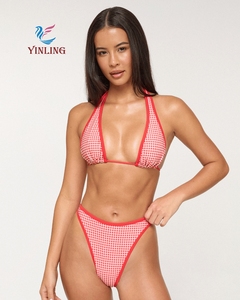
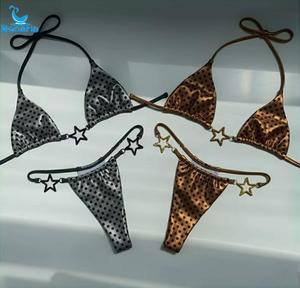
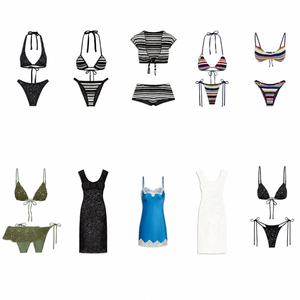
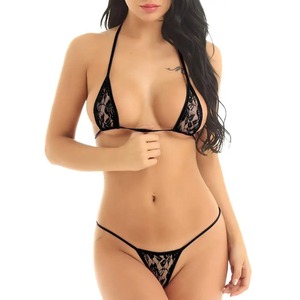
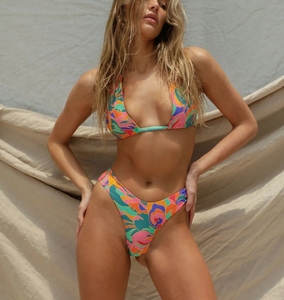
Factory-direct technical manufacturing calibrated for micro, string, Brazilian, and luxury high-cut swimwear brands. Fully customizable from silhouette to custom sustainable packaging.


⚙
Precision Micro-Pattern Grading
Thong bikini bottoms demand surgical millimeter precision. Our CAD pattern system prevents gaping, riding, or roll-edges across standard XS to 3XL sizing regimes.
♻
GRS Certified Circular Knits
Direct mill partnerships guarantee certified REPREVE® recycled polyester and regenerated ECONYL® nylon, batch-traceable with public transaction certificates.
🛡
Chlorine & Sunblock Shield
Fabrics survive 200+ continuous hours in chlorinated and sea-salt water tanks without elastane degradation or opacity loss in sheer/white colorways.
Comprehensive Strategic Procurement Whitepaper: China Thong Bikini Manufacturing Landscape
The global swimwear market has observed an accelerated pivot toward minimalist silhouettes, ultra-high-cut hip contours, and cheek-baring Brazilian cuts. For independent direct-to-consumer (DTC) designers, international fashion conglomerates, and boutique resort labels, procuring thong bikinis from Chinese manufacturers requires navigating technical fabric elasticity, stretch retention, edge-finishing techniques, and supply chain integrity. As specialized suppliers operating from the textile epicenter of Panyu District, Guangzhou, Beyond Swimwear Co., Ltd. provides an empirical roadmap for global sourcing directors.
1. The Anatomy of Commercial Thong Bikini Construction
Unlike conventional full-coverage swim briefs, thong and micro-bikini silhouettes impose severe mechanical demands upon textile stretch and seam engineering. A standard bottom pattern features minimal fabric surface area; consequently, tensile pressure concentrates directly along the leg openings, crotch gusset, and delicate side ties.
Elastic Core Specifications
Commercial longevity depends on rubber core selection. Conventional low-cost swim manufacturers rely on natural rubber elastics, which perish and lose modulus within 30 wash-wear cycles when exposed to body oils and sunscreens. We deploy chlorine-resistant synthetic poly-isoprene and silicone-coated elastic filaments. These retain over 94% tensile rebound after 200 hours of continuous submersion in ASTM D471 chemical soak simulations.
Edge Finishing & Seam Engineering
- Zig-Zag Lockstitch: Traditional three-step zig-zag edge finishes with interior elastic insert, providing standard durability for mid-tier volume programs.
- Raw Clean-Finish (Seamless Turn-Out): Preferred by luxury resortwear labels. The lining and face fabric are bonded and turned without visible topstitching, providing a soft, butter-like body contour that prevents digging into soft tissue.
- Overlock Reinforced Micro-Tubing: String bikini ties require high tensile breaking limits. Our strings utilize 4-needle overlock loops tested to 45 Newtons before elongation failure.
2. Sustainable Textile Trends: GRS, REPREVE®, & ECONYL®
Environmental scrutiny in swimwear has escalated from consumer preference to legislative mandates across the European Union and North America. Procurement officers are now accountable for extended producer responsibility (EPR) regulations and greenwashing liabilities.
Traceability Architecture: Beyond Swimwear Co., Ltd. supplies verifiable Global Recycled Standard (GRS) Certificate GRC03701 documentation, along with OEKO-TEX® Standard 100 Class I (Cert. SH050 230239) validation for direct infant-skin contact compliance.
Modern luxury swimwear utilizes 190 GSM to 240 GSM recycled circular interlock weaves. Recycled polyester (rPET) derived from post-consumer ocean-bound plastic bottles offers superior sublimation print fidelity, razor-sharp edge contrast, and deep color saturation. In contrast, regenerated polyamide (ECONYL® nylon) offers unmatched surface hand-feel, silkiness, and higher drape fluidity, making it the preferred composition for solid matte, ribbed, and metallic luster collections.
3. Procurement Forecast: Micro-Trends Shaping 2026–2028
Strategic inventory procurement requires forecasting consumer adoption cycles 12 to 18 months ahead of seasonal retail drops. Our research reveals distinct manufacturing trends governing upcoming seasons:
- 3D Textured Jacquards & Ribbed Surfaces: Smooth flat fabrics are increasingly augmented by crinkle seersucker, corded honeycomb, and heavy ribs. These surfaces camouflage minor anatomical variations, expanding fit tolerances across standard size grades.
- Hybrid Hardware Integrations: Marine-grade zinc alloy loops, matte-black acetate rings, and PVD-coated gold hardware designed to resist 96-hour salt-spray fog corrosion without tarnishing or leaching nickel.
- Convertible & Multi-Way Strapping: Economic considerations drive consumer preference toward versatility. Dual-channel sliding triangle tops and convertible thongs with multi-point waist attachments provide variable coverage options within a single SKU.
- Biodegradable Stretch Elastanes: The next frontier integrates circular polyamides with Roica™ V550 or similar degradable elastanes, solving the microplastic fragmentation challenge at garments' end-of-life.
4. Comparative Supply Chain Matrix: Factory-Direct vs. Intermediaries
Sourcing directly from our Guangzhou facility mitigates the price gouging, latency, and information opacity associated with offshore import brokers and trading agencies.
- Margin Preservation: Eliminate third-party agent markups ranging from 30% to 50%, redirecting capital into higher-grade regenerated yarns or branded packaging components.
- Technical Resolution Velocity: Inquiries, pattern adjustments, and shrinkage variance questions are handled directly by sample pattern-makers within 2 business hours, rather than filtered through multi-tier communication chains.
- Batch Quality Assurance: Factory floor QC operates strictly under AQL 2.5 standards across 4 production phases: raw fabric roll inspection via 4-point frame, cut-piece verification, inline assembly audits, and final boxed random testing.
Frequently Asked Technical Procurement Inquiries
Definitive answers covering commercial terms, sampling protocols, and manufacturing technicalities.
What is your actual minimum order quantity (MOQ) for custom thong bikini sets?
Our baseline manufacturing MOQ is 50 pieces per style, per colorway. This 50-piece minimum accommodates a full size assortment (XS, S, M, L, XL, up to 3XL) within the same colorway, allowing emerging boutique lines and established labels to test cutting-edge micro cuts with minimal warehouse capital risk.
How do you prevent sheer opacity in white, pastel, or micro-thong swim bottoms?
All light colorways and micro-coverage styles are constructed using either high-density 220+ GSM face fabrics or paired with matching ultra-fine 140 GSM four-way stretch nylon lining. Each light-color production batch undergoes a wet-stretch opacity bench test under high-lux directional lighting before cut-and-sew authorization.
What is the sampling lead time and fee structure?
Physical counter-samples require 2 to 3 weeks from tech-pack signoff and fabric confirmation. Sampling fees average USD $50 per style, which includes pattern drafting, grading, and free fit-revision rounds. The full sample development fee is credited back against bulk production invoices exceeding 100 pieces.
Can you manage complete private label trims, hygienic liners, and eco-packaging?
Yes. We provide comprehensive OEM branding execution: heat-transfer label printing, woven satin damask labels, silicone heat seals, laser-engraved metal tags, custom printed compostable EVA zipper bags, hangtags, and compliant self-adhesive hygiene protection liners affixed to every bikini bottom.
What quality standard is executed on bulk orders?
Every order follows ISO-certified AQL 2.5 Major / 4.0 Minor inspection guidelines executed by our full-time in-house QC department of six dedicated specialists. We verify stitching integrity (minimum 10-12 stitches per inch), cross-seam stretch elasticity, symmetry, dimensional tolerances within +/- 0.5 cm, and packaging barcoding.
How do you manage international logistics and customs paperwork?
We maintain tier-one account contracts with DHL Express, FedEx, and UPS providing door-to-door transit times of 4 to 7 business days worldwide. For enterprise volume, our freight forwarding arm handles bonded DDP (Delivered Duty Paid), air freight cargo, sea container shipping, and export documentation including GRS recycled content batch declarations.