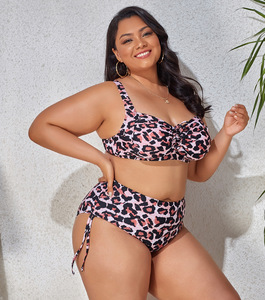
Top China Kids Bikini Factory & Exporter
Industrial Whitepaper on Technical Swimwear Manufacturing, Global Safety Compliance, and Sustainable OEM/ODM Sourcing Solutions
Factory Showroom
Featured Swimwear Lines & Custom OEM Prototypes
Direct from our specialized production lines: high-precision silhouettes, technical stretch profiles, and market-ready prototypes engineered for private label deployment.
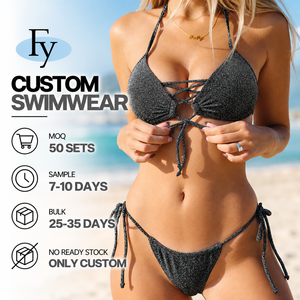
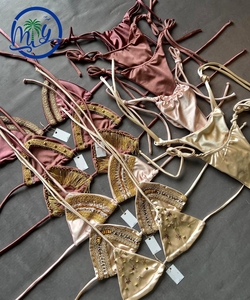

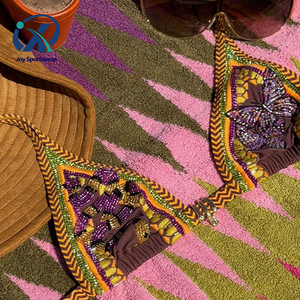
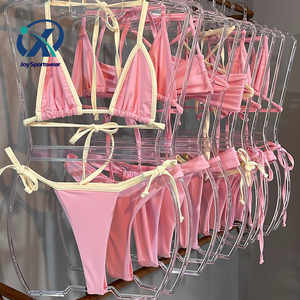
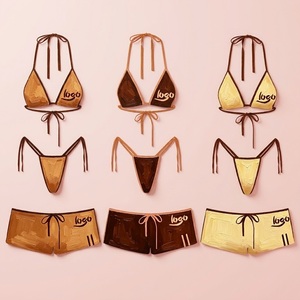
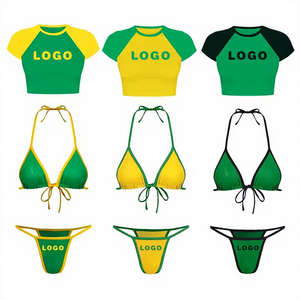
Factory Benchmark
Why Global Brands Partner with Beyond Swimwear
Delivering institutional-grade manufacturing since 2017 out of Dalong Street, Panyu District, Guangzhou. Our infrastructure is architected to eliminate supply chain fragility.
50 PCS
Flexible Minimum Order
2-3 WKS
Rapid Prototyping
AQL 2.5
Quality Standard
30+
Export Destinations
Direct Manufacturer Economics
Eliminate intermediate commission fees that traditionally add 30% to 50% to landed costs. Partnering direct with our Panyu facility provides factory wholesale price architecture, transparent BOM calculations, and open-door production access.
Verified Safety & Eco Credentials
Access our network holding OEKO-TEX® Standard 100 Class I (Cert. SH050 230239) and GRS (Global Recycled Standard Cert. GRC03701). Full lot-level trace certifications protect your brand against customs holds and non-compliance fines.
Agile Low MOQ Sourcing
While legacy plants enforce 500-1,000 unit minimums, we empower DTC disruptors and specialized retailers with a responsive 50 pcs per style/color MOQ, permitting size distribution from XS to 3XL inside a single run to mitigate inventory holding risks.
Procurement Whitepaper
Strategic Sourcing Analysis: The Kids & Technical Swimwear Frontier
An exhaustive analysis of regulatory pressures, chemical compliance protocols, and technical material trajectories transforming children's and youth beachwear procurement through 2030.
1. The Regulatory Landscape: Hyper-Stringent Global Safety Protocols
Procurement executives navigating the international children’s swimwear marketplace must treat chemical compliance and structural mechanical integrity as non-negotiable baselines. Sourcing kids' bikinis, tankinis, and two-piece sets requires an engineering approach far removed from standard adult apparel. Under US CPSIA (Consumer Product Safety Improvement Act), European EN 14682 (Safety of Children's Clothing - Cords and Drawstrings), and OEKO-TEX® Standard 100 Class I, children's swimwear undergoes the most aggressive chemical and mechanical testing in the global textile trade.
From a mechanical perspective, our manufacturing protocols strictly restrict functional and decorative cords in the chest, neck, and waist zones. A primary driver of customs recalls across US and EU ports of entry involves drawstrings exceeding permissible lengths or failing bar-tack tensile tests. At our Dalong Street factory, every structural seam on youth two-piece sets undergoes computerized computerized lock-stitching, ensuring closures, elastic leg openings, and shoulder straps withstand dynamic mechanical loads exceeding 70 Newtons without elongation failure or thread pop.
Chemically, Class I OEKO-TEX® benchmarks dictate virtually zero tolerances: total lead content in surface substrates must not exceed 90 ppm, total phthalates (including DEHP, DBP, BBP, DINP) must remain strictly undetectable below 50 ppm, and formaldehydes are banned completely. Furthermore, skin sensitivity factors necessitate nickel-free metal trims and hyper-stabilized sublimation dye dispersion to ensure that no toxic amine cleavage occurs during perspiration or pool immersion.
2. Material Evolution: Next-Generation UPF 50+ Circular Polymers
Modern demographic shifts indicate that end consumers no longer evaluate kids' swimsuits solely on aesthetic vibrance. Maternal purchase intent is overwhelmingly governed by verifiable dermatological protection and circular fiber provenance. The conventional blend of raw virgin polyamide with low-grade spandex is rapidly being phased out by premium tier brands in favor of REPREVE® recycled polyester (derived from verified post-consumer PET bottles) and ECONYL® regenerated nylon (harvested from decommissioned fishing nets and industrial plastic waste).
Achieving permanent UPF 50+ ultraviolet protection without topical chemical treatments is a technological milestone achieved across our knitting mills. Rather than relying on transient zinc oxide wash finishes that degrade after 5 to 10 domestic laundering cycles, our textile matrices utilize high-density fiber extrusion coupled with titanium dioxide nanoparticle integration within the polymer dope itself. This guarantees permanent physical blocking of 98%+ UVA and UVB radiation over the product’s lifecycle, retaining structural UPF integrity even when the garment is fully saturated with hyper-saline or heavily chlorinated water.
| Performance Parameter | Standard Virgin Commercial Blend | Beyond Swimwear Circular UPF50+ Matrix | Testing Protocol Baseline |
|---|---|---|---|
| Chlorine Degradation Resistance | Fiber breakdown at 40-50 pool hours | 200+ continuous hours (Creora HighClo™) | ISO 105-E03 Pool Water Immersion |
| Ultraviolet Block Retention | Degrades ~30% across 15 washes | Permanent UPF 50+ Rating (Wet & Dry) | AS/NZS 4399 / EN 13758-1 |
| Elastic Recovery (Modulus) | 78% recovery post dynamic strain | 94.8% high-rebound recovery rate | ASTM D4964 Elastic Stretch Test |
| Eco Verification Traceability | Self-declared commercial claim | Lot-Certified GRS & TC Transaction Record | Global Recycled Standard Audit |
3. Future Procurement Strategies: The Shift Toward Micro-Batch Agile Cycles
The legacy paradigm of placing 5,000-unit speculative purchase orders 9 months ahead of the summer retail season is structurally defunct. DTC swim disruptors, independent resort labels, and institutional department stores are shifting rapidly toward agile, demand-driven replenishment. Inventory carrying costs, coupled with high terminal liquidation write-downs, render traditional rigid manufacturing economically dangerous.
By consolidating our production cycles into an agile 50-piece minimum per colorway while maintaining an average 15-to-20 day bulk turnaround on inventory textiles, Beyond Swimwear Co., Ltd. allows merchandising directors to execute "test-and-scale" drops. Brands launch seasonal capsules with multiple print variants, gather real-time digital point-of-sale data within 14 days, and deploy immediate repeat production orders with priority slot scheduling. This compressed operational cycle reduces terminal deadstock risks by up to 68% while dramatically elevating gross margin return on investment (GMROI).
Factory Inquiry Desk
Frequently Asked Questions: Global Sourcing & Production
Clear, authoritative technical answers addressing engineering, customs clearance, pattern grading, and minimum order commitments.
How does your factory ensure compliance with US and European children's apparel safety laws?
We adhere strictly to CPSIA (USA), EN 14682 (EU), and AS/NZS standards. Every youth swim piece is built with embedded cord safety protocols—eliminating free-hanging drawstrings in the neck area and locking down elastic drawstrings with heavy bar-tack stitches. All raw materials, dyes, and elastic trims are backed by OEKO-TEX® Standard 100 Class I certifications, proving zero detectable harmful chemicals, phthalates, or lead substrates. We provide accredited laboratory test documentation prior to export dispatch.
What is the baseline MOQ and turnaround time for custom kids and women's swimwear?
Our flexible MOQ is 50 pieces per style and color, supporting a mixed distribution of sizes (such as youth 2T-14Y or adult XS-3XL) within that single allocation. Sample prototypes are engineered, graded, and delivered in 2 to 3 weeks. Bulk production is executed within 15 to 20 days upon tech-pack and prototype sign-off when utilizing in-stock technical base fabrics.
Can you support private label branding, custom packaging, and custom sublimation?
Yes. As a comprehensive OEM/ODM factory, we deliver full private-label execution: high-density heat-transfer interior neck labels, soft woven side tabs, custom logo metal hardware (chlorine- and salt-spray tested), personalized silicone hygiene liners, FSC-certified recycled swing tags, and branded biodegradable polybags. Our digital sublimation printing offers precise Pantone color matching and ultra-sharp pattern definition.
How does your factory manage Quality Control (QC) during mass manufacturing?
Quality control is 100% in-house and never outsourced to unverified third-party contractors. We enforce AQL 2.5 final inspection protocols executed by 6 certified in-house QC inspectors. Our quality gate system involves: 1) 4-point fabric inspection upon warehouse arrival, 2) in-line stitching and tension audits during assembly, 3) dynamic stretch and seam-break load tests, and 4) finished product dimensional auditing against the approved tech pack. Detailed digital QC inspection dossiers are shared with clients prior to shipment release.
How do you provide proof of recycled yarn authenticity for GRS compliance?
Every production batch utilizing REPREVE® or ECONYL® regenerated fibers is accompanied by official supplier-backed Transaction Certificates (TC) issued through the Textile Exchange Global Recycled Standard (GRS Cert. GRC03701). These certificates track raw waste collection, pellet conversion, spinning, and fabric knitting, giving your marketing and compliance departments legally defensible documentation against greenwashing scrutiny.